
How High-Quality Flexible Packaging Enhances Product Value
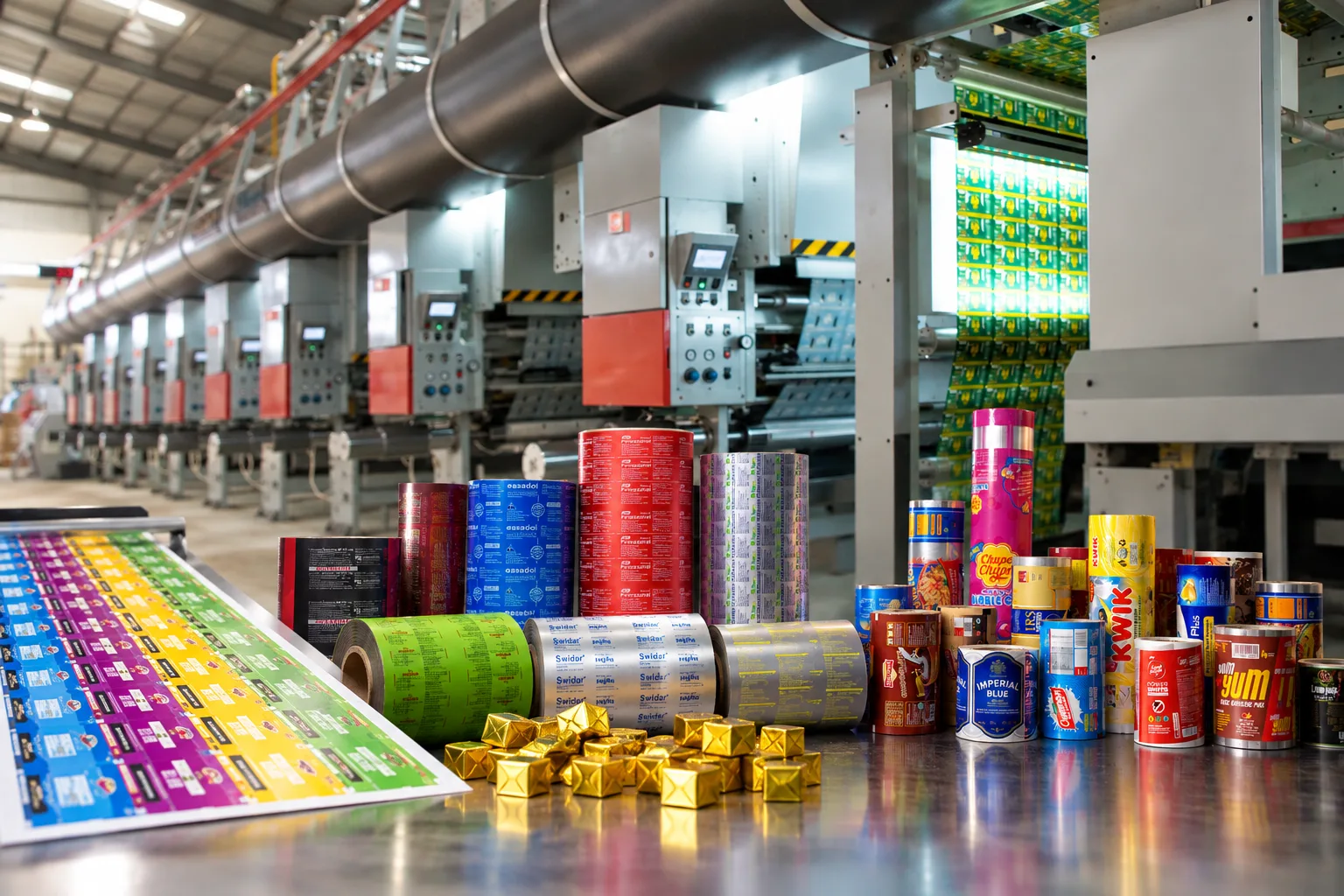
Today, industries ranging from food and FMCG to pharmaceuticals are recognizing that high-quality packaging is not simply a protective layer but a strategic asset that directly influences commercial success. Nowhere is this more evident than in flexible packaging, where a thin, carefully engineered material must protect the product, run smoothly on high-speed machines, and carry the brand to the shelf.
At Boden Industries, we specialize in flexible packaging, bouillon wrappers, and pharmaceutical packaging. Each of these categories asks something different of the material, yet they share one principle: the package must perform consistently, every time. Our focus on delivering compliant, high-performance flexible packaging solutions is rooted in the understanding that superior packaging creates measurable value far beyond its primary function.
Why Flexible Packaging Delivers More Value
Flexible packaging has become one of the most widely used packaging formats because it achieves a great deal with very little material. Laminates, wrappers, foils, and pouches are lightweight, take up minimal space before filling, and typically use far less material per unit of product than rigid alternatives such as cans, jars, or bottles. This lowers material, storage, and transportation costs across the supply chain.
The real strength of flexible packaging, however, lies in its versatility. By combining layers of film, aluminium foil, and paper into a single laminate, each layer can be given a specific job: one provides a high-quality print surface, another a barrier against moisture or oxygen, another mechanical strength, and another a reliable seal. The result is a structure that can be tailored precisely to the product it protects.
Engineering the Right Barrier for Every Product
The value of a product depends heavily on its condition when it reaches the end user. Moisture, oxygen, light, and odours are the main threats to shelf life, and every product is sensitive to them in a different way. A seasoning cube can cake when it absorbs moisture, fats can turn rancid when exposed to oxygen, and many medicines lose stability when exposed to humidity or light.
High-quality flexible packaging addresses these risks through the careful selection of materials and laminate structures. Aluminium foil provides an excellent barrier against moisture, gases, and light, while metallized and coated films deliver strong barrier performance in lighter, more economical structures. Getting this balance right preserves shelf life and helps manufacturers reduce waste and product losses from the production facility to final consumption.
Bouillon Wrappers: Precision at High Speed
Bouillon cubes and seasoning tablets are among the most demanding products to wrap. They are rich in salt and fat, highly aromatic, and sensitive to moisture, and they are packed on high-speed wrapping lines that produce very large volumes.
A high-quality bouillon wrapper must therefore do several things at once. It needs a dependable barrier to keep out moisture and lock in flavour and aroma. It must resist grease and fat so that oils do not migrate through the wrapper and stain the printed surface. It needs good dead-fold characteristics so that the wrap holds its shape tightly around the cube. And it must be supplied with consistent dimensions and accurate print registration so that every small cube carries a clean, correctly positioned design.
When these properties are engineered into the wrapper from the start, manufacturers benefit from fewer machine stoppages, less rejected product, and a finished cube that looks as good on the shelf as it tastes in the kitchen.
Pharmaceutical Packaging: Protection Patients Depend On
In pharmaceuticals, packaging is part of the product's safety. Primary packaging formats such as blister lidding foils, strip packs, and sachets are in direct contact with the medicine, and they must keep it stable and effective throughout its approved shelf life.
This requires reliable barrier performance against moisture, oxygen, and light, consistent seal integrity, and materials suited to pharmaceutical use. Printing must be precise and legible, because dosage information, batch details, and product identification help ensure that the right medicine reaches the right patient. Equally important is consistency: pharmaceutical manufacturers need packaging materials that perform identically from batch to batch so that their own processes remain validated and compliant.
For pharmaceutical customers, high-quality packaging is not a premium feature. It is the foundation of regulatory compliance and patient trust.
Supporting Operational Efficiency on the Packaging Line
Flexible packaging materials must perform on the customer's machines, not just on a specification sheet. Form-fill-seal machines, cube wrappers, and blister packing lines run at high speeds, and even small variations in material can lead to downtime, wastage, or sealing failures.
Properties such as seal strength, sealing temperature range, slip characteristics, roll dimensions, and winding quality all influence how smoothly a material runs. Packaging manufactured to tight tolerances allows customers to run their lines faster and more reliably, reduce changeover issues, and minimize rejects throughout the packaging lifecycle.
Strengthening Brand Trust Through Consistency
Whether it is a seasoning cube on a kitchen shelf, a snack pouch in a retail aisle, or a strip of tablets in a pharmacy, the printed surface of a flexible pack shapes expectations of quality before the product is ever used.
Sharp graphics, accurate colours, and consistent print quality across every production run help brands look the same in every market and every batch. This consistency reinforces recognition and confidence, and it is particularly important in regulated industries, where packaging quality directly influences product safety, regulatory compliance, and consumer trust.
Sustainability as a Value Driver
Flexible packaging already starts from an efficient position, using less material and adding less transport weight. The industry is building on this through down-gauging, optimizing laminate structures so that a product uses only the layers it truly needs, and developing mono-material structures designed for recyclability where performance requirements allow. The future of flexible packaging lies in achieving the right balance between protection, performance, and sustainability.
At Boden Industries, we continue to develop packaging solutions that help our customers protect product quality, improve operational performance, and compete with confidence in evolving markets.